साष्टांग नमन Sashtang Naman He Majhe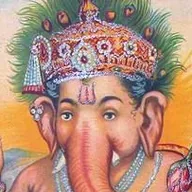
-
साष्टांग नमन हे माझे गौरीपुत्रा विनायका
Sashtang Naman He Majhe Gauriputra Vinayaka
I bow before you in full prostration, Vinayaka, son of Gauri.
https://chalisa.co.in/2017/01/sashtang-naman-maze-lyrics/ -
भक्तीनें स्मरतो नित्य आयुःकामार्थ साधती
Bhaktinen Smarato Nitya Aayuhkamartha Sadhati
Those who remember him every day with devotion gain long life, their wishes and wealth.
https://greenmesg.org/stotras/ganesha/sankata_nashak_ganesh_stotra.phpYour puja book reads स्मरता here, and the other online copy reads स्मरतां. Meaning follows the Sanskrit verse this line renders. This copy reads smarato (I remember) where other copies read smaratan (on remembering), which does not change what the line promises.
-
प्रथम नांव वक्रतुंड दुसरें एकदंत ते
Pratham Namv Vakratund Dusaren Ekadant Te
His first name is Vakratunda, the one with the curved trunk, and the second is Ekadanta, the one with a single tusk.
https://greenmesg.org/stotras/ganesha/sankata_nashak_ganesh_stotra.phpMeaning follows the Sanskrit verse this line renders.
-
तिसरे कृष्णपिंगाक्ष चवथे गजवक्र ते
Tisare Krushnapingaksha Chavathe Gajavakra Te
The third is Krishnapingaksha, the one with dark brown eyes, and the fourth is Gajavaktra, the elephant-faced one.
https://greenmesg.org/stotras/ganesha/sankata_nashak_ganesh_stotra.phpSources differ here. Sant Sahitya reads: तीसरेकृष्णपिंगाक्ष चवथे गजवक्त्र तें २ Meaning follows the Sanskrit verse this line renders. This copy spells the fourth name Gajavakra; the meaning given is for the usual form Gajavaktra, elephant-faced.
-
पांचवे श्रीलंबोदर सहावें विकट नांव ते
Panchave Shrilambodar Sahaven Vikat Namv Te
The fifth is Lambodara, the big-bellied one, and the sixth is Vikata, the one of huge form.
https://greenmesg.org/stotras/ganesha/sankata_nashak_ganesh_stotra.phpMeaning follows the Sanskrit verse this line renders. Some translators take Vikata as fearsome rather than huge.
-
सातवे विघ्नराजेंद्र आठवे धुम्रवर्ण ते
Satave Vighnarajendra Aathave Dhumravarna Te
The seventh is Vighnarajendra, king over all obstacles, and the eighth is Dhumravarna, the smoke-coloured one.
https://blog.practicalsanskrit.com/2011/08/shri-ganesha-stotram.htmlYour puja book adds श्री before विघ्नराजेंद्र. Meaning follows the Sanskrit verse this line renders.
-
नववे श्री भालचंद्र दहावे श्री विनायक
Navave Shri Bhalachandra Dahave Shri Vinayak
The ninth is Bhalachandra, who wears the moon on his forehead, and the tenth is Vinayaka, the remover of obstacles.
https://greenmesg.org/stotras/ganesha/sankata_nashak_ganesh_stotra.phpMeaning follows the Sanskrit verse this line renders. Another translation takes Vinayaka as the supreme hero.
-
अकरावे गणपती बारावे श्री गजानन
Akarave Ganpati Barave Shri Gajanan
The eleventh is Ganapati, chief of the ganas, the divine attendants, and the twelfth is Gajanana, the elephant-faced one.
https://greenmesg.org/stotras/ganesha/sankata_nashak_ganesh_stotra.phpMeaning follows the Sanskrit verse this line renders.
-
देवनांवे अशी बारा तीन संध्या म्हणे नर
Devanamve Ashi Bara Tin Sandhya Mhane Nar
Whoever recites these twelve names of the god at the three meeting points of the day, dawn, noon and dusk,
https://greenmesg.org/stotras/ganesha/sankata_nashak_ganesh_stotra.phpMeaning follows the Sanskrit verse this line renders. One sentence across lines 9 and 10.
-
विघ्नभीती नसे त्याला प्रभो ! तू सर्व सिद्धिदे
Vighnabhiti Nase Tyala Prabho ! Tu Sarva Siddhide
has no fear of obstacles, for you, Lord, are the giver of every success.
https://blog.practicalsanskrit.com/2011/08/shri-ganesha-stotram.htmlMeaning follows the Sanskrit verse this line renders, in the reading that names the Lord as the bringer of all success. One sentence across lines 9 and 10.
-
विद्यार्थ्याला मिळे विद्या धनार्थ्याला मिळे धन
Vidyarthyala Mile Vidya Dhanarthyala Mile Dhan
One who seeks learning gains learning, and one who seeks wealth gains wealth.
https://greenmesg.org/stotras/ganesha/sankata_nashak_ganesh_stotra.phpMeaning follows the Sanskrit verse this line renders.
-
पुत्रार्थ्याला मिळे पुत्र मोक्षार्थ्याला मिळे गति
Putrarthyala Mile Putra Moksharthyala Mile Gati
One who longs for a son is given a son, and one who seeks liberation reaches that goal.
https://greenmesg.org/stotras/ganesha/sankata_nashak_ganesh_stotra.phpMeaning follows the Sanskrit verse this line renders.
-
जपता गणपती स्तोत्र सहा मासांत हे फळ
Japata Ganpati Stotra Saha Masant He Phal
Chanting this Ganapati hymn brings its fruit within six months.
https://greenmesg.org/stotras/ganesha/sankata_nashak_ganesh_stotra.phpSources differ here. Sant Sahitya reads: जपतागणपति गणपतिस्तोत्र सहामासात हे फळ Meaning follows the Sanskrit verse this line renders.
-
एक वर्ष पुर्ण होतां मिळे सिद्धी न संशय
Ek Varsha Purna Hotan Mile Siddhi Na Sanshay
When a full year is completed, one attains fulfilment, and of this there is no doubt.
https://greenmesg.org/stotras/ganesha/sankata_nashak_ganesh_stotra.phpMeaning follows the Sanskrit verse this line renders.
-
नारदांनी रचिलेले झाले संपू्र्ण स्तोत्र हें
Naradanni Rachilele Jhale Sampurna Stotra Hen
So ends this complete hymn, composed by the sage Narada.
https://chalisa.co.in/2017/01/sashtang-naman-maze-lyrics/This closing couplet belongs to the Marathi version and takes the place of the Sanskrit final verse.
-
श्रीधराने मराठींत पठण्या अनुवादिले
Shridharane Marathint Pathanya Anuvadile
Shridhar translated it into Marathi so that it could be recited.
https://chalisa.co.in/2017/01/sashtang-naman-maze-lyrics/Sources differ here. Sant Sahitya reads: श्रीधाराने मराठीत पठान्या अनुवादिले ८ Your puja book has a different closing line here, one no online copy has. As read from the scan: तशा सर्व विद्या प्राप्त होतात सद्गुरुकृपेने. Check it against the book; if your household sings the book's line, replace this one.