लवथवती विक्राळा Lavthavti Vikrala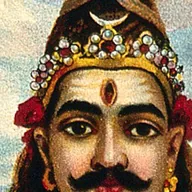
-
लवथवती विक्राळा ब्रह्माण्डी माळा
Lavathavati Vikrala Bramhandi Mala
A vast and terrifying presence sways, and the whole chain of universes sways with it.
https://www.sanatan.org/mr/a/560.htmlThe most contested line in this aarti. Three published readings exist: the garland of universes trembling at the halahal poison; a garland of planets and constellations on Shankar's neck; or Rudra himself dancing in a fearsome form.
-
वीषे कण्ठ काळा त्रिनेत्री ज्वाळा
Vishe Kantha Kala Trinetri Jvala
The poison has turned his throat dark, and flames burn in his three eyes.
https://marathi.webdunia.com/article/hinduism-marathi/shankar-aarti-lyrics-with-meaning-121031200032_1.html -
लावण्य सुन्दर मस्तकी बाळा
Lavanya Sundar Mastaki Bala
On his head sits a beautiful young woman: the river Ganga.
https://www.sanatan.org/mr/a/560.html'Bala' literally means a girl or a child. Here it means the river Ganga, so the literal sense would mislead completely.
-
तेथुनिया जळ निर्मळ वाहे झुळझुळा
Tethuniya Jal Nirmal Vahe Jhulajhula
And from there clear water flows down, murmuring.
https://marathi.webdunia.com/article/hinduism-marathi/shankar-aarti-lyrics-with-meaning-121031200032_1.html -
जय देव जय देव जय श्रीशंकरा
Jai Dev Jai Dev Jai Shrishankara
Glory to the god, glory to the god, glory to Shri Shankar.
https://amit.chakradeo.net/religious-stotra/paravachaa/shankar-aaratee/ -
आरती ओवाळू तुज कर्पुरगौरा
Aarti Ovalu Tuj Karpuragaura
We circle the aarti lamp before you, you who are fair as camphor.
https://amit.chakradeo.net/religious-stotra/paravachaa/shankar-aaratee/'Karpuragaura' is an epithet describing Shiva's complexion as white as camphor, not a statement about camphor being present.
-
कर्पुर्गौरा भोळा नयनी विशाळा
Karpurgaura Bhola Nayani Vishala
Fair as camphor, guileless, with wide eyes.
https://amit.chakradeo.net/religious-stotra/paravachaa/shankar-aaratee/'Bhola' is not negative here. It is a settled devotional epithet, 'Bhola Shankar', meaning artless and quick to be pleased.
-
अर्धांगी पार्वती सुमनांच्या माळा
Ardhangi Parvati Sumananchya Mala
Parvati occupies half his body, and he wears garlands of flowers.
https://amit.chakradeo.net/religious-stotra/paravachaa/shankar-aaratee/'Ardhangi' points to the Ardhanarishvara form, in which Shiva and Parvati share one body, rather than merely meaning 'his wife'.
-
विभुतीचे उधळण शितिकण्ठ नीळा
Vibhutiche Udhalan Shitikantha Nila
Sacred ash is scattered over him, and his throat is dark blue.
https://www.sanatan.org/mr/a/560.html -
ऐसा शंकर शोभे उमावेल्हाळा
Aisa Shankar Shobhe Umavelhala
So Shankar shines, doting on Uma.
https://amit.chakradeo.net/religious-stotra/paravachaa/shankar-aaratee/Most sources read the compound as an epithet of Shiva, 'beloved of Uma'. Some printed texts split it in two, making it an epithet of Uma instead.
-
जय देव जय देव जय श्रीशंकरा
Jai Dev Jai Dev Jai Shrishankara
Glory to the god, glory to the god, glory to Shri Shankar.
https://amit.chakradeo.net/religious-stotra/paravachaa/shankar-aaratee/Refrain, same as line 5.
-
आरती ओवाळू तुज कर्पुरगौरा
Aarti Ovalu Tuj Karpuragaura
We circle the aarti lamp before you, you who are fair as camphor.
https://amit.chakradeo.net/religious-stotra/paravachaa/shankar-aaratee/Refrain, same as line 6.
-
देवी दैत्यी सागरमन्थन पै केलें
Devi Daityi Sagaramanthan Pai Kelen
The gods and the demons churned the ocean together.
https://amit.chakradeo.net/religious-stotra/paravachaa/shankar-aaratee/ -
त्यामाजी अवचित हळाहळ जें उठिले
Tyamaji Avachit Halahal Jen Uthile
Out of it, without warning, rose halahal, a poison deadly enough to burn up the whole world.
https://amit.chakradeo.net/religious-stotra/paravachaa/shankar-aaratee/ -
ते त्वां असुरपणे प्राशन केलें
Te Tvan Asurapane Prashan Kelen
You drank it down without hesitating.
https://amit.chakradeo.net/religious-stotra/paravachaa/shankar-aaratee/'Asurpane' literally means 'in the manner of a demon' and is not an insult. It describes the reckless, unhesitating way he gulped the poison down. This is the word here most likely to be mistranslated.
-
नीलकण्ठ नाम प्रसिद्ध झालें
Nilakantha Nam Prasiddha Jhalen
And that is how the name Nilkanth, the blue-throated one, became famous.
https://amit.chakradeo.net/religious-stotra/paravachaa/shankar-aaratee/ -
जय देव जय देव जय श्रीशंकरा
Jai Dev Jai Dev Jai Shrishankara
Glory to the god, glory to the god, glory to Shri Shankar.
https://amit.chakradeo.net/religious-stotra/paravachaa/shankar-aaratee/Refrain, same as line 5.
-
आरती ओवाळू तुज कर्पुरगौरा
Aarti Ovalu Tuj Karpuragaura
We circle the aarti lamp before you, you who are fair as camphor.
https://amit.chakradeo.net/religious-stotra/paravachaa/shankar-aaratee/Refrain, same as line 6.
-
व्याघ्राम्बर फणिवरधर सुन्दर मदनारी
Vyaghrambar Phanivaradhar Sundar Madanari
Clothed in tiger skin, wearing the great serpent as an ornament, beautiful, the destroyer of Madana.
https://amit.chakradeo.net/religious-stotra/paravachaa/shankar-aaratee/'Madanari' means enemy of Madana, that is Kamadeva the god of desire, whom Shiva burned with his third eye.
-
पंचानन मनमोहन मुनिजन सुखकारी
Panchanan Manamohan Munijan Sukhakari
Five-faced, captivating to the mind, the giver of peace to sages.
https://amit.chakradeo.net/religious-stotra/paravachaa/shankar-aaratee/ -
शतकोटीचें बीज वाचे उच्चारी
Shatakotichen Bij Vache Uchchari
He ceaselessly utters the seed-syllable that carries the fruit of a hundred crore repetitions: the name of Rama.
https://www.sanatan.org/mr/a/560.htmlContested subject. One source makes Shiva the one chanting Rama's name endlessly; another makes the reciter, Ramdas, the one uttering it.
-
रघुकुळटिळक रामदासा अन्तरी
Raghukulatilak Ramadasa Antari
Rama, the ornament of the Raghu line, lives inside Ramdas.
https://amit.chakradeo.net/religious-stotra/paravachaa/shankar-aaratee/The composer's signature line, the Marathi convention of naming yourself in the closing verse. Sources read lines 21 and 22 as one sentence.
-
जय देव जय देव जय श्रीशंकरा
Jai Dev Jai Dev Jai Shrishankara
Glory to the god, glory to the god, glory to Shri Shankar.
https://amit.chakradeo.net/religious-stotra/paravachaa/shankar-aaratee/Refrain, same as line 5.
-
आरती ओवाळू तुज कर्पुरगौरा
Aarti Ovalu Tuj Karpuragaura
We circle the aarti lamp before you, you who are fair as camphor.
https://amit.chakradeo.net/religious-stotra/paravachaa/shankar-aaratee/Refrain, same as line 6.